The Paper Problem: Why Virgin Pulp Demand is Unsustainable
Paper might feel like a material with a low environmental impact compared to plastics or metals, but its production can be surprisingly destructive. Most paper is still made from virgin fibre – freshly harvested wood pulp – rather than recycled sources. As global demand for paper-based packaging, office supplies and hygiene products continues to rise, so does the pressure on the world’s forests.Over the last 40 years, global paper consumption has risen by 400%, driving a steadily growing demand for natural resources. Currently, the paper industry is responsible for around 35% of all trees cut down globally. In 2024, the
British Ecological Society estimated that around 15 billion trees are felled commercially each year, and this doesn’t even include the forests lost to fires, which we have seen on an enormous scale in recent years.

The process not only reduces biodiversity by destroying habitats, but also eliminates one of our most powerful natural tools for absorbing atmospheric carbon dioxide. Forest loss now contributes around 10% of global greenhouse gas emissions.The environmental toll doesn’t stop at production. When paper is discarded instead of recycled, it often ends up in landfill. There, it decomposes anaerobically (without oxygen) which leads to the release of methane, a greenhouse gas over 80 times more potent than carbon dioxide over a 20-year period. This turns improperly managed paper waste into a significant contributor to climate change.

A Circular Alternative
A circular economy approach treats waste not as a burden, but as a resource. In this model, paper is recovered after use, reprocessed, and turned into new products. High-quality paper fibres can be recycled up to seven times before degrading beyond reuse.By integrating secure paper destruction and recycling into your business operations, you’re not only managing data responsibly; you’re actively helping reduce emissions, conserve resources and promote circularity.
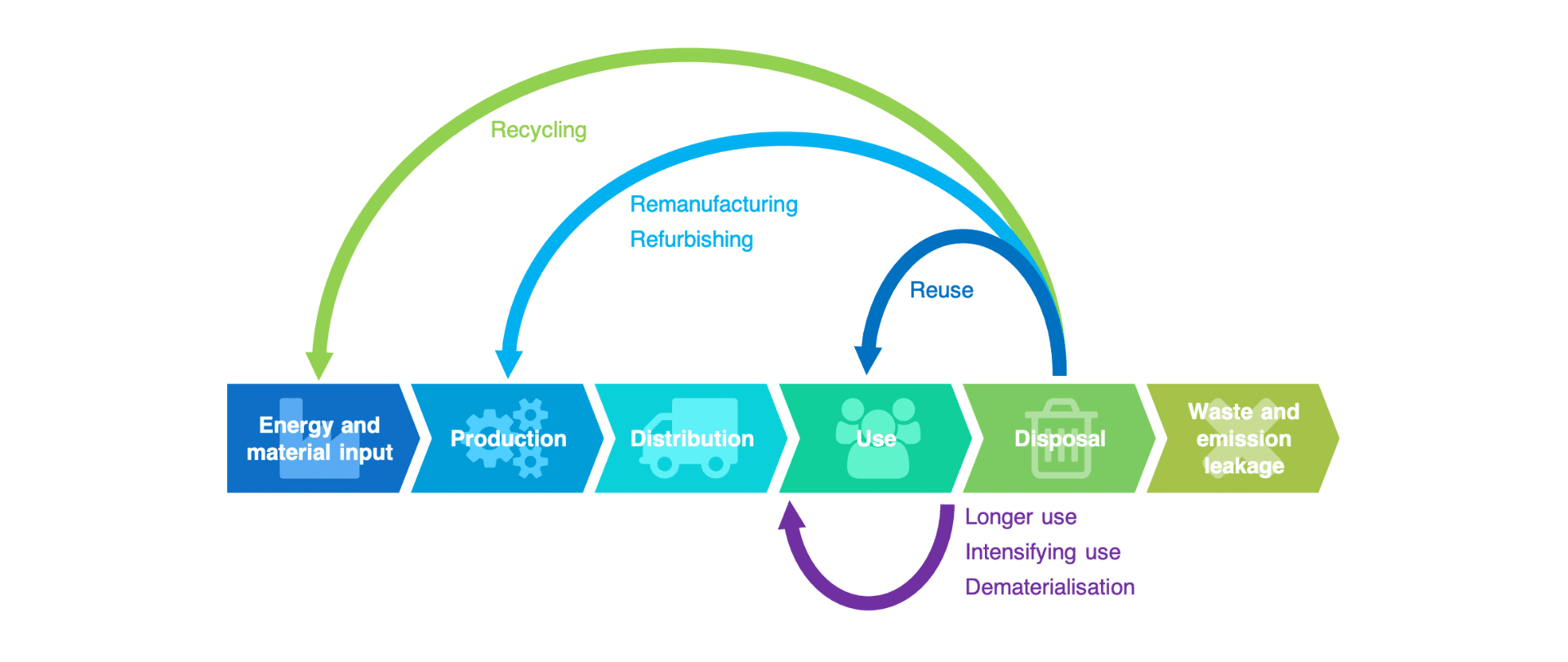
The Paper Life Cycle: Step by Step
1. Natural Resource Extraction
Most paper begins its life in forests. Virgin paper is made from plant materials – mainly wood pulp. If recycling is not prioritised, trees must be cut down, processed and transported to paper mills. This phase consumes enormous amounts of energy and contributes directly to habitat destruction and biodiversity loss.Beyond wood, paper can also be made from cotton, hemp, bamboo, or agricultural residues, but wood remains the dominant source globally. Unfortunately, paper production from virgin fibre is both energy- and water-intensive, and often linked to poorly regulated logging in vulnerable ecosystems like boreal forests and tropical rainforests.

2. Manufacturing
Once the fibres are extracted, they are chemically or mechanically pulped. Chemical pulping yields stronger paper and removes lignin, but involves the use of harsh chemicals like sodium hydroxide and sulphites. Mechanical pulping uses less chemical input but retains more lignin, leading to yellowing and degradation over time.The manufacturing process releases significant amounts of greenhouse gases and generates wastewater, which must be treated before discharge. Mills using recycled pulp significantly reduce emissions: recycling paper is said to lower greenhouse gas emissions by up to 74% compared to virgin production.

3. Consumption
Office printers, newspapers, packaging, hygiene products – paper is everywhere. Increasingly, consumers and businesses have access to paper products with recycled content, often marked as ‘post-consumer’ or ‘pre-consumer’ waste.Choosing paper with high post-consumer recycled content supports demand for recycled material and incentivises investment in collection and processing infrastructure. It’s one of the simplest choices companies can make to reduce their environmental footprint.

4. Sorting
Once used, paper needs to be sorted. In traditional waste streams, this happens at material recovery facilities (MRFs), where paper is separated by grade: office paper, cardboard, newspaper, and so on.However, mixed waste streams often result in contamination. This reduces the quality of the final pulp and increases the energy and cost required to reprocess it.That’s where professional paper shredding services like
Securall® from Avena make a difference. By securely shredding and pre-sorting high-grade office paper from lower-quality materials, Avena helps preserve fibre integrity. This produces a cleaner pulp, requires less energy to recycle, and enhances the yield of new paper products, all while maintaining stringent data security standards.

5. Reprocessing
Once sorted, paper is re-pulped, cleaned and reformed into new paper products. These might include office paper, tissue, cardboard, or even insulation materials.Every successful loop through this process reduces reliance on virgin fibre, cuts emissions, and keeps paper out of landfill. But it all hinges on the quality and cleanliness of the material being recycled. Secure, separated collections are key to making reprocessing truly efficient and circular.

Secure Collection, Sorting and Closed-Loop Recycling with Avena
Not all paper recycling is equal. Paper that’s contaminated with food, liquids or other waste often can’t be reused. And documents containing confidential data need to be handled with care.Avena’s Securall® service satisfies the demands of sustainability and compliance. It provides secure on-site or off-site document destruction, followed by clean sorting and verified closed-loop recycling. This means your business’s confidential waste is guaranteed not to end up in landfill or incineration sites.All collected material is processed into high-grade pulp for reuse in new UK-manufactured paper products, keeping materials in use and emissions low. The service is fully auditable, helping businesses comply with UK GDPR, ISO 14001, and corporate ESG goals.

Supporting the Circular Economy and Reducing Emissions
Secure paper destruction might seem like a small act, but it has far-reaching impacts. It supports circular economy principles by:
- Reducing demand for virgin materials
- Diverting paper from landfill, cutting methane emissions
- Meeting local demand for recycled pulp
- Keeping resources in circulation longer
- Helping businesses meet sustainability and legal compliance standards

What Businesses Can Do: Rethink, Recycle, Reinvent
If your organisation generates significant volumes of paper waste, particularly confidential material, now is the time to act. Ask yourself:
- Are we currently recycling our office paper?
- Is it being securely handled?
- Do we know what happens to it after collection?
- Do we have documentation that proves compliance in the event of an audit?
- Could we do more to meet our sustainability and data compliance obligations?
Avena’s Securall® service offers a simple, auditable and environmentally responsible solution. By combining secure document destruction with high-quality closed-loop recycling, it turns paper waste from a liability into a sustainable asset.Interesting in learning more about our services?
Speak to one of our experts today.Looking for a quick quote for secure destruction & recycling?
Get a quote today. 
Sources: